West Kent Local News
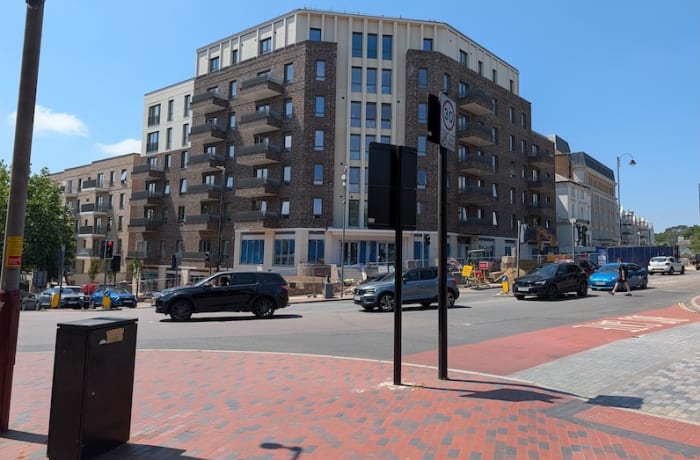
New homes under construction in Kent (file photo, not the Tunbridge Wells or Tonbridge & Malling sites named in this story). Image credit: Ron Lee / Geograph, CC BY-SA 2.0.
Tunbridge Wells Must Now Plan for 1,098 Homes a Year - Just as Its Water Company's Reservoirs Run Low
Tunbridge Wells Borough Council is now working to a housing need of 1,098 homes a year - up from 678 - after the government's revised Standard Methodology produced what the council itself calls 'a substantial uplift'. The figure lands just as South East Water's own published data shows one of its two major reservoirs less than a fifth full, and as a petition over water supply and housing targets passes 24,500 signatures with the backing of six Kent and Sussex MPs.
In numbers
Tunbridge Wells' annual housing need
Previous figure678 homes/year
New figure, under 2026's revised Standard Methodology1,098 homes/year
Source: Tunbridge Wells Borough Council
South East Water reservoir levels, 11 October 2026
Ardingly Reservoir19.4% full
Arlington Reservoir43% full
50% full
Source: South East Water
Tonbridge & Malling: new homes the water network can support vs. the government's target
South East Water's stated capacity~6,300 homes
Government housing target~20,000 homes
Source: South East Water, as cited by the Halt The Houses campaign
Where the 1,098 figure comes from
The borough's new Local Plan, adopted in December 2025, was built around a 15-year housing land supply. Under a change introduced through that process, the council now has to plan on a 10-year land supply instead - and under the government's revised Standard Methodology, that works out at 1,098 dwellings a year, against the 678 a year applied to the plan that was just adopted. To find room for the extra homes, the council has launched a 'Call for Sites' exercise, inviting residents, landowners, developers and agents to put forward land for assessment. It was due to close in August but has been extended twice and now runs until midnight on Monday 26 October. Sites put forward aren't automatically allocated - each one goes into a technical assessment (a Strategic Housing and Economic Land Availability Assessment) before any of them could feature in a future Local Plan review.
What the water company's own figures show
South East Water publishes weekly levels for its two biggest reservoirs, Ardingly and Arlington, which together supply around 8% of the drinking water across its Kent and Sussex region. As of Sunday 11 October, Ardingly Reservoir stood at 19.4% full and Arlington at 43% full. A Temporary Use Ban - a hosepipe ban - remains in force across the whole of South East Water's supply area; the exemptions that had still applied in Sussex were withdrawn from 9 October.
Why there's no quick fix on the way
South East Water's own position, set out in its FAQs for the Broad Oak Water scheme near Canterbury, is that it 'already operates in an area of serious water stress' and will need to find at least an extra 90 million litres of water a day across Kent by 2050 - nearly half of what it supplies on average today. Broad Oak Water, a new reservoir the company wants to build north of Canterbury, is intended to supply up to 22 million litres of that a day, but the company isn't expecting to submit a planning application until 2028 and doesn't expect to be delivering water from it until 2035. It's also an East Kent scheme, not a West Kent one. The rest of the company's plan to close the gap includes halving leakage by 2050, a new groundwater source near Aylesford, and a desalination plant at Reculver that isn't due until 2044.
The Tonbridge & Malling figure behind the petition
The 'Halt the Houses' campaign, which is separate from and not affiliated with this site, cites a specific figure for neighbouring Tonbridge & Malling: that South East Water told the council its current infrastructure could only support around 6,300 additional homes, against a government housing target requiring almost 20,000. The campaign's petition - calling for water infrastructure to be proven before new housing is approved, rather than afterwards - had passed 24,500 signatures at the time of writing, and lists six Kent and Sussex MPs among its supporters: Tom Tugendhat (Tonbridge), Laura Trott (Sevenoaks), Helen Grant (Maidstone and Malling), Helen Whately (Faversham and Mid Kent), Katie Lam (Weald of Kent) and Dr Kieran Mullan (Bexhill and Battle).