West Kent Local News
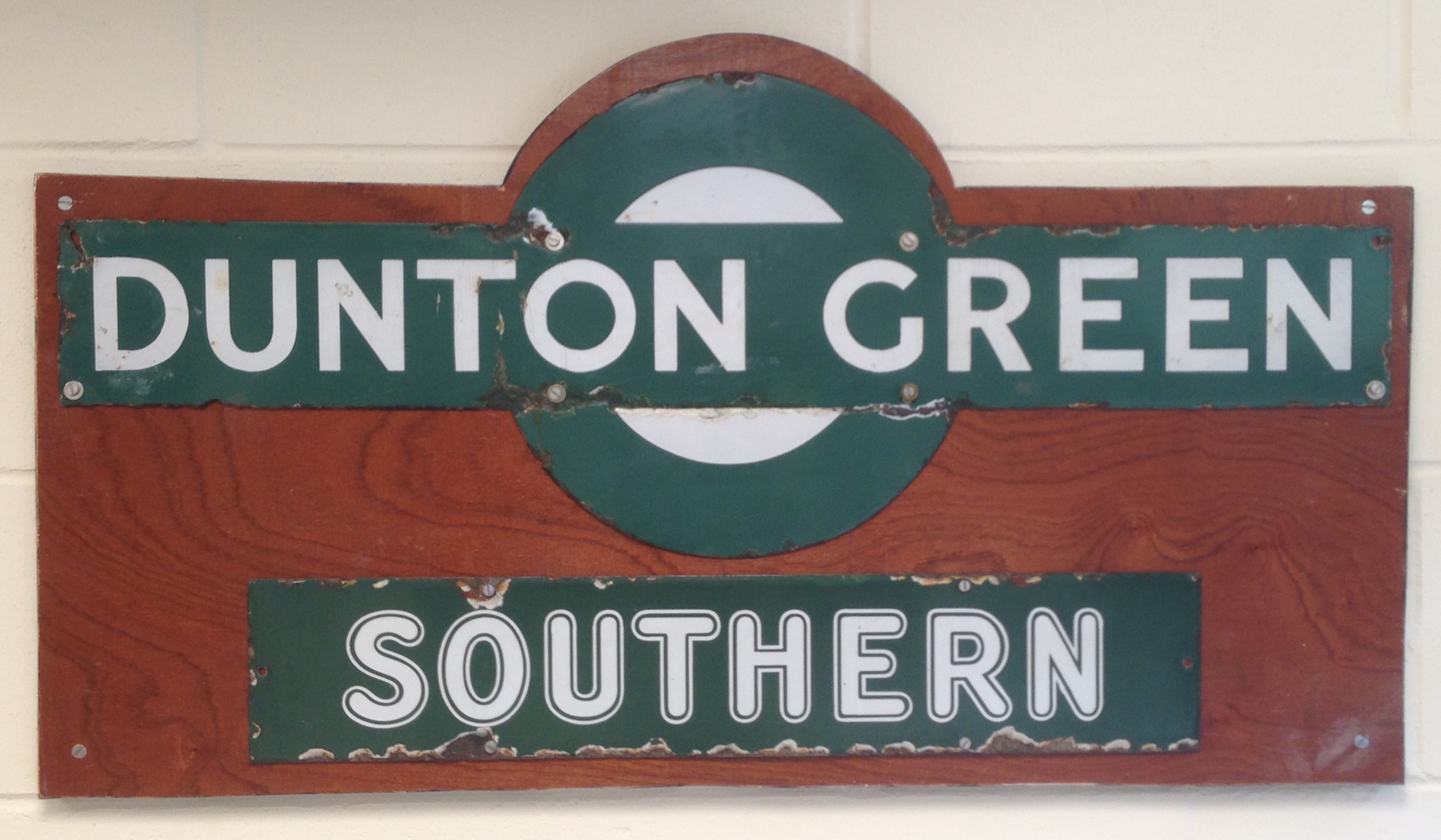
A Southern Railway station name sign for Dunton Green, from the same era as the 1927 crash, now preserved in the village hall. Image credit: Alphaboi1 / Wikimedia Commons, CC BY-SA 4.0.
The 1927 Sevenoaks Rail Disaster: Thirteen Killed on the Line Through Dunton Green
Day 12 of 15. Yesterday's story was a single police constable, beaten to death on a quiet Snodland lane in 1873. Today's is the opposite in scale: a crowded express train, a split-second derailment, and thirteen people who never reached Sevenoaks station alive.
🌧️ A wet morning, a fast train
Wednesday 24 August 1927 had been a day of heavy rain across Kent, clearing by around 2pm. At 5pm, Southern Railway's express from Cannon Street to Deal via Minster left London, eight coaches long and including the Pullman car Carmen. It was hauled by No. 800 River Cray, one of the ‘River’ class tank engines - large, powerful locomotives only recently introduced onto Southern Railway's Kent lines. The driver, named in railway records only as Buss, took the train down the four-mile falling grade from Knockholt summit towards Dunton Green at around 60mph, having just passed through Polhill Tunnel.
💥 The derailment
Just past Dunton Green station, where the line crosses a cutting spanned by an overbridge carrying Shoreham Lane - a bridge with a central supporting pier set between the two tracks - River Cray's leading nearside wheel climbed the rail, dropped back down, and the engine began to roll. It struck the bridge pier side-on, careered roughly another hundred yards down the line, and dragged three coaches off the track with it. Thirteen passengers were killed. The driver suffered cuts and bruises; his fireman was knocked unconscious for two days. One survivor, Brigadier-General Archibald Jack, was himself a railway engineer.
⚖️ Locomotive, or track?
The River class had form: similar engines had rolled dangerously at speed earlier that year, in at least one case re-railing itself before anyone was hurt. Investigators pointed to the design's high centre of gravity, stiff springing, and water surging in its side tanks as a recipe for instability at speed - and to the worn state of the old South Eastern and Chatham Railway track the Southern had inherited. Chief Inspecting Officer John Wallace Pringle led the official inquiry in person, reporting in February 1928. Trials of the same locomotive design at 85mph on the Great Northern main line afterwards found it performed perfectly well there - evidence that pointed at least as much at Kent's own permanent way as at the engine itself. No single, clean answer was ever settled on.
⚙️ What happened to the River class
Southern Railway didn't wait for Pringle's report. Every remaining River class tank engine was withdrawn from service and rebuilt as a tender locomotive - the new SR U class 2-6-0, with the solitary odd-one-out becoming a one-off U1. The class that caused one of inter-war Britain's worst rail disasters never ran as a tank engine on these rails again.
🚉 The line today
Dunton Green station is still open, still served by regular South Eastern Main Line trains between London and the Kent coast, and the stretch of line through the old cutting is as busy as ever - this is now one of the most heavily used commuter routes into London. We couldn't find any record of a memorial marking the spot itself; if one exists, it isn't widely documented. Ninety-nine years on, most passengers rattling through that cutting towards Sevenoaks will have no idea what happened there.
🎃 💀 🎃
The countdown so far
🎃 15 Dark Tales of West Kent — the countdown so farSolid = published · dashed = still to come
12 of 15 published
PublishedToday’s storyNot yet published (location only)
SevenoaksTonbridge & MallingMaidstoneTunbridge Wells
Where it is
Dunton Green station, just south of the 1927 crash site on the South Eastern Main Line.