 West Kent Local News
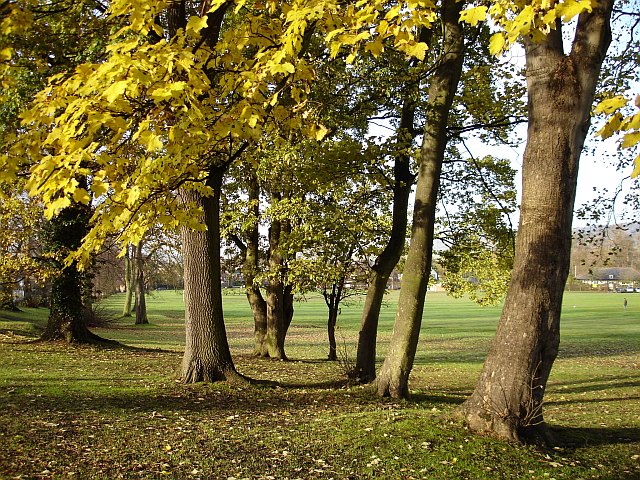
Penenden Heath today - the remnants of the heath, now a recreation ground on the edge of Maidstone. Image credit: Penny Mayes / Geograph, CC BY-SA 2.0.
Penenden Heath: The Maidstone Suburb That Was Kent's Court and Gallows for 800 Years
Day 15 of 15 - the last one. Yesterday's story was Maidstone Prison, rebuilt in 1819 to be Kent's own gallows for a century. Today's explains where the condemned were hanged before that prison even existed: a patch of common ground on the edge of Maidstone that was, for eight hundred years, both the county's courtroom and its killing ground.
⚖️ Kent's open-air court
Long before Maidstone had a town hall, the county's business was settled in the open air at Penenden Heath - a stretch of common ground used as the venue for Kent's shire moot since Anglo-Saxon times. The name may even come from the Saxon word pinian, "to punish" - a possible clue that this was a place of justice, and its sharper edges, centuries before the Normans arrived. The heath's most famous legal moment came a decade after the Conquest. Around 1075-77, William the Conqueror ordered a three-day inquiry held here into whether Odo, Bishop of Bayeux and the King's own half-brother, had defrauded the Church of Canterbury of its lands while serving as Earl of Kent. Archbishop Lanfranc argued the case in person; so did Odo. Among the witnesses called was Æthelric, a frail former bishop of Selsey who was, by then, too old to ride and had to be brought to the heath by cart simply because he was considered the last living authority on pre-Conquest English law. Lanfranc won, recovering a swathe of estates for the Church - and the Trial of Penenden Heath is still cited by legal historians today as one of the clearest signs that Norman rulers, in the first years after 1066, chose to work through Anglo-Saxon law rather than simply discard it.
🧙 Six women hanged as witches
The heath's darker use ran in parallel with its legal one: from the Anglo-Saxon period into the 19th century, Penenden Heath was also Kent's principal site of execution, and between the 12th and 17th centuries, that included people convicted of witchcraft. The best-documented case dates to 1652, when six women - Anne Ashby (also known as Cobler), Anne Martyn, Mary Browne and Anne Wilson, along with Mildred Wright of Cranbrook and Mary Read of Lenham - were hanged on the heath after being found guilty of witchcraft. A contemporary pamphlet recorded the mood of the crowd that day: some, it said, wished the women had been burned rather than hanged, on the belief that "the body of a witch being burnt, her blood is prevented thereby from becoming hereditary to her progeny" - the idea that only fire, not the rope, could stop whatever the crowd believed they carried from passing to their children.
☘️ The priest who wouldn't talk
The heath's most politically charged execution came more than a century later. On 7 June 1798, Father James Coigly - an Irish Catholic priest and a leading organiser for the Society of United Irishmen - was hanged, then beheaded, on Penenden Heath for high treason. Coigly had spent years building republican alliances across Ireland, England and France, and was arrested at Margate about to board a boat to Paris, carrying an address to the French government calling for an invasion of England. At his trial he refused an offer to save his own life in exchange for naming his fellow conspirators, all of whom were then acquitted. By one account he even refused last rites on the scaffold rather than give a government-sent priest the names he wanted. Theobald Wolfe Tone, hearing the news in Paris, wrote in his diary that if he ever reached Ireland he would be the first to propose a monument to Coigly's memory. A century later, pilgrims travelled to Maidstone for the rebellion's centenary and installed stained-glass windows in his memory at St Francis Church, where they still stand today.
⛓️ The last man hanged - and he was innocent
Public executions continued on the heath into the 19th century, but the last one exposed exactly why the system needed to change. In 1830, John Dyke, a young man from nearby Bearsted, was hanged on Penenden Heath for burning a hayrick - and it later emerged that he was innocent of the crime. His death marked the end of execution on the heath: new gallows were built instead outside the gates of the newly rebuilt Maidstone Prison on Week Street - yesterday's story in this series - which took over as Kent's official place of execution from 1831 onward, at first in public, then from 1868 behind its own walls.
🏘️ Where it stands today
None of this is obvious from Penenden Heath today. The heath itself survives only as a recreation ground, hemmed in on all sides by the streets of the Maidstone suburb that grew up around it through the 19th and 20th centuries - a scatter of mature lime, oak and chestnut trees along its edges the only real clue that this was once open heathland. There's a children's playground, a pub, a row of shops, and a junction of the M20 and the A249 close by. Walk across it today and there's nothing to suggest that this quiet patch of grass once served, almost in the same breath, as Kent's parliament and its place of death. That feels like the right note to end this countdown on: fifteen days, fifteen places across West Kent, and over and again the past turning out to be a lot closer to the present than it looks.
🎃 💀 🎃
🎃 15 Dark Tales of West Kent — the countdown so farSolid = published · dashed = still to come
15 of 15 published
PublishedToday’s storyNot yet published (location only)
SevenoaksTonbridge & MallingMaidstoneTunbridge Wells
Penenden Heath recreation ground, Maidstone - all that remains of the heath where Kent held its shire court and its executions for 800 years.
Source: Wikipedia, Penenden Heath, Wikipedia, Trial of Penenden Heath, Wikipedia, James Coigly (citing Seánchas Ardmhacha: Journal of the Armagh Diocesan Historical Society, 1998).


